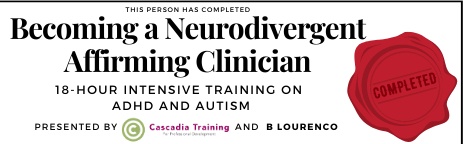
I specialize in neurodivergence, specifically autism, ADHD, and auDHD as it shows up for individuals and couples. I work with folks learning who they are—often later in life. I offer individual and couples therapy across Oregon, with a focus on identity, relationships, and communication.
Often this shows up during transitions—clear or still taking shape. A diagnosis. A shift in a relationship. A role that starts asking more of you than it used to.
Many people reach out because of ongoing relationship stress, communication breakdowns, or patterns that don’t change even with a lot of insight.
Sometimes it’s less defined than that.
You might notice you’re thinking a lot about what’s happening, trying to understand it, name it, work it through internally, but something still doesn’t fully settle or change.
It can feel like you’re moving through life with insight, but without a clear sense of how to make things feel more workable in practice.
In couples therapy, this often shows up as two people who care deeply about each other but feel stuck in repeating patterns or ongoing communication difficulties.
Especially in moments of stress, overwhelm, or emotional intensity, it can feel like:
- what one person is trying to communicate doesn’t land the way it was intended
- both partners end up feeling misunderstood, even after long conversations
- patterns repeat, even when there is insight about what is happening
This is particularly common in mixed-neurotype relationships, including couples navigating autism, ADHD, auDHD, or other differences in how information, emotion, or sensory experience is processed.
The work is not about deciding who is right or wrong.
It’s about slowing things down enough to see what is actually happening between you in those moments—and beginning to build ways of relating that fit the people you actually are.
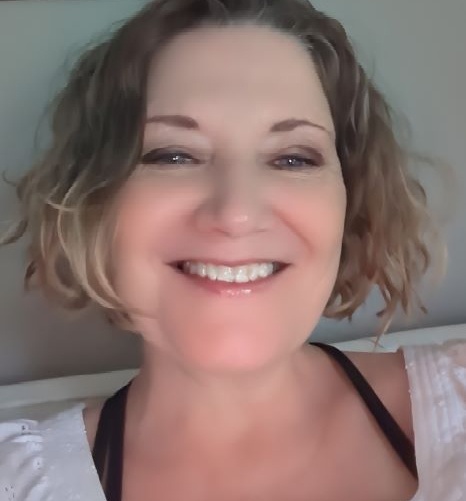
I’m Kerry Headley, an Oregon-licensed therapist providing online therapy for adults and couples.
My work includes neurodivergence, relationship challenges, and what a meaningful life looks like based on who you really are.